
Sinar Mas Agribusiness and Food Bersama PAACLA Indonesia Perkuat Komitmen Wujudkan Lingkungan Ramah Anak di Sektor Perkebunan
12 June 2026
Kartu Merah untuk Pekerja Anak: Indonesia Apresiasi 10 Perusahaan lewat PAACLA Award 2026 di Tengah Peringatan Hari Dunia Menentang Pekerja Anak
19 June 2026Red Card to Child Labour: Indonesia Honors 10 Companies with PAACLA Award 2026 for Their Efforts to Tackle Child Labour in Commemorating the World Day against Child Labour 2026
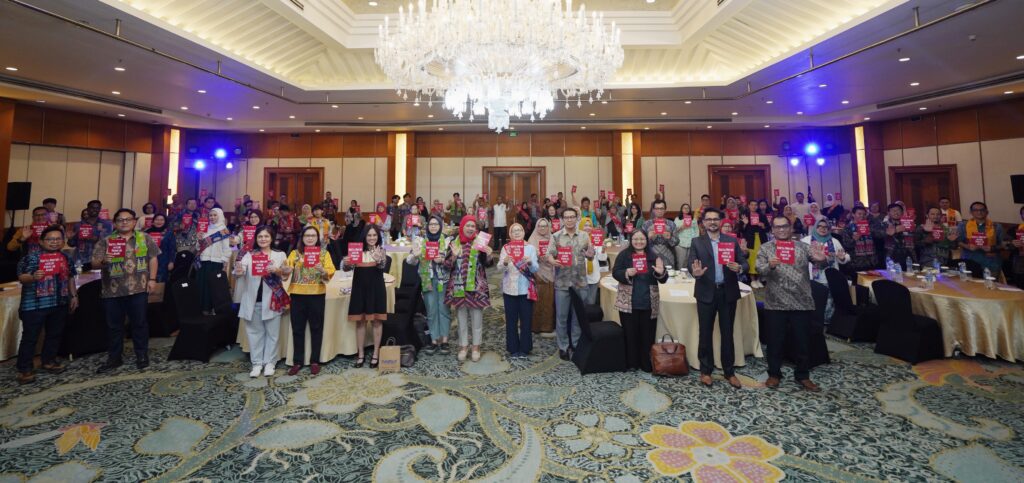
Jakarta, 18 June 2026. The Partnership for Action Against Child Labour in Agriculture (PAACLA) Indonesia, in collaboration with the Government of Indonesia and with support from the ECLT Foundation, organized the National Seminar and PAACLA Award 2026 Ceremony at the Grand Sahid Jaya Hotel, Jakarta, on Thursday (18 June). Held under the theme “Red Card to Child Labour: Towards Sustainable Agriculture Without Child Labour,” the event aligns with the global theme of World Day Against Child Labour 2026 established by the International Labour Organization (ILO): “Red Card to Child Labour: Fair Play for Children, Decent Work for Adults.”
The World Day Against Child Labour has been observed annually on 12 June since its establishment by the ILO in 2002. This year’s commemoration follows the 6th Global Conference on the Elimination of Child Labour, which produced the Marrakesh Global Framework for Action Against Child Labour that addresses the root causes of child labour and strengthens collective efforts to eliminate it worldwide. According to the ILO, an estimated 138 million children remain engaged in child labour globally, including nearly 54 million involved in hazardous work. These figures underscore the need to sustain momentum towards achieving Sustainable Development Goal (SDG) Target 8.7, which calls for the elimination of child labour in all its forms.
The event was organized by PAACLA Indonesia in partnership with the Ministry of National Development Planning (Bappenas), the Ministry of Manpower, the Ministry of Human Rights, the ECLT Foundation, the ILO Office for Indonesia and Timor-Leste, the UN Global Compact Network Indonesia (IGCN), the Indonesian Palm Oil Association (GAPKI), the Industrial Collaborative Initiative (ICI), the Cocoa Sustainability Partnership (CSP), and the NGO Network for the Prevention of Child Labour (JARAK). More than 150 participants attended the event, including representatives from government ministries and agencies, private sector companies and business associations, civil society organizations, United Nations agencies, diplomatic missions, and the media.
Child Labour in the Agricultural Sector
Data from Statistics Indonesia (BPS), presented during the seminar, showed that the number of child labourers aged 5-17 years in Indonesia declined from 1.27 million in 2024 to 1.05 million in 2025, representing a reduction of approximately 220,000 children within a year. Despite this progress, child labour remains a significant concern. More than half of all child labourers (55.21%) are employed in the services sector, followed by agriculture (29.79%) and manufacturing (14.99%).
Most child labourers live in rural areas and are engaged in informal economic activities, including family enterprises and micro, small, and medium-sized enterprises (MSMEs) that form part of the supply chains of various agricultural commodities. The informal sector is generally characterized by unregistered businesses, small-scale or household-based operations, limited access to formal systems, inadequate worker protection, and low levels of regulatory compliance. Families that depend on informal employment often face unstable incomes, which can increase the likelihood of children becoming involved in economic activities, either within family-owned businesses or enterprises operated by others.
Within agricultural supply chains, the informal sector plays a critical role, particularly at the upstream stages of production for strategic commodities such as palm oil, cocoa, rubber, tobacco, cloves, and other agricultural products. However, activities in the informal sector are often insufficiently monitored by lead companies and labour inspection authorities, creating blind spots in the identification and prevention of child labour. As a result, children remain at risk of engaging in work that may interfere with their education, health, safety, and overall development. Beyond its impact on children’s well-being, child labour also perpetuates cycles of poverty, undermines human capital development, and creates reputational and compliance risks for businesses.
Opening of the National Seminar and PAACLA Award 2026
The National Seminar and PAACLA Award 2026 officially began with opening remarks from Dr. Nur Hygiawati Rahayu, Director of Manpower at the Ministry of National Development Planning (Bappenas) and Coordinator of PAACLA Indonesia. The event was then formally opened by Mr. Munafrizal Manan, Director General of Human Rights Services and Compliance at the Ministry of Human Rights, who delivered a opening address on behalf of the Minister of Human Rights.
In her remarks, Dr. Nur Hygiawati Rahayu emphasized that the elimination of child labour is a shared responsibility that requires strong cross-sectoral collaboration. Under the theme “Red Card for Child Labour: Towards Sustainable Agriculture Without Child Labour,” the event highlighted that sustainability should be measured not only by economic performance but also by respect for human rights, including the rights of children. Amid growing global expectations for responsible business practices through Environmental, Social, and Governance (ESG) frameworks, Business and Human Rights approaches, and Human Rights Due Diligence, child labour has become an increasingly important issue within the broader agendas of development, employment, human rights, and national economic competitiveness.
Bappenas also highlighted the agricultural sector as a strategic sector that continues to face vulnerabilities that may contribute to children’s involvement in economic activities. Therefore, efforts to eliminate child labour must be pursued through integrated approaches, including strengthening child protection systems, expanding access to quality education, enhancing social protection, improving family livelihoods, creating decent work opportunities for adults, and promoting responsible business practices. The elimination of child labour is viewed as a strategic investment towards achieving Indonesia Emas (Golden Indonesia) 2045, as it contributes directly to improving human capital and advancing the Sustainable Development Goals (SDGs). Through the PAACLA Award 2026, the Government encourages companies to strengthen their commitment to child labour-free supply chains and to share good practices that can inspire broader collective action towards a productive, inclusive, and rights-respecting agricultural sector.
In his opening remarks, Mr. Munafrizal Manan emphasized the Government’s call for all stakeholders to demonstrate concrete commitment to ending child exploitation and ensuring that every child enjoys the right to grow, learn, and develop to their full potential. He noted that these efforts are aligned with the President of Indonesia’s Asta Cita (Eight National Aspirations) agenda, particularly the commitment to strengthening Pancasila (literally means Five Principles, Indonesia’s National Ideology) values, democracy, and respect for human rights as the foundation of national development.
The Ministry of Human Rights further stressed that the elimination of child labour cannot be achieved by the Government alone. It requires active participation from the private sector through the implementation of Business and Human Rights principles. Referring to the United Nations Guiding Principles on Business and Human Rights (UNGPs), companies are encouraged to conduct Human Rights Due Diligence throughout their supply chains to identify, prevent, and address human rights risks, including child labour.
As part of broader efforts to strengthen responsible business governance, the Ministry is currently developing a Human Rights Compliance Assessment framework for business entities. This initiative aims to ensure that business operations are conducted ethically, fairly, sustainably, and free from child labour and other forms of human rights violations. Through the PAACLA Award 2026, the Government hopes to encourage more companies to integrate respect for children’s rights into their core business practices and contribute to sustainable agricultural development in Indonesia.
National Seminar: From Policy to Business Practices
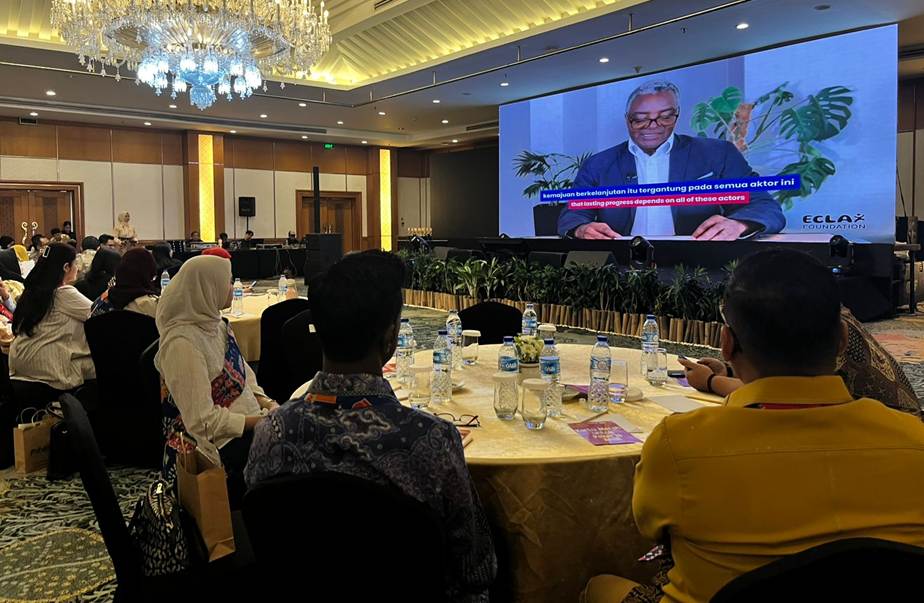
As the opening session of the national seminar, a keynote address was delivered by Dr. Innocent Mugwagwa, Executive Director of the ECLA Foundation, through a video presentation. His message provided a global perspective and strategic direction for the elimination of child labour in the agricultural sector.
In his remarks, Dr. Mugwagwa emphasized that the elimination of child labour in agriculture can only be achieved through strong collaboration among governments, businesses, workers’ organizations, civil society, communities, and development partners. According to him, child labour is not merely a labour issue; it is also closely linked to children’s rights, education, development, family livelihoods, and intergenerational poverty. As these challenges are interconnected, the solutions must likewise be integrated and comprehensive. In this context, PAACLA Indonesia was recognized as a valuable example of a multi-stakeholder partnership, providing a platform for dialogue, learning, and collaboration that bridges diverse sectors in pursuit of a common goal: sustainable agriculture free from child labour.
ECLA also highlighted that the PAACLA Award is more than a recognition programme; it serves as a platform to celebrate leadership, innovation, commitment, and human values in efforts to protect children. The good practices showcased through the awards are expected to inspire more organizations and companies to integrate child rights protection, responsible business practices, and sustainable agricultural development as mutually reinforcing objectives.
As ECLT transitions into ECLA, the organization reaffirmed its commitment to continue supporting partnerships built on social dialogue, solidarity, and collective action. According to ECLA, the success of PAACLA demonstrates that meaningful change can be achieved when all stakeholders work together to ensure that every child is protected, every worker is treated with dignity, and every family has the opportunity to pursue a more prosperous future.
National Seminar
The national seminar session featured four speakers representing diverse yet complementary perspectives. The session was moderated by Ms. Dede Shinta Sudono from the ILO Office for Indonesia and Timor-Leste. The four speakers are:
- Mr. WAHYUDI DJAFAR, Executive Director of Catalyst Policy Works
- Mr. CHAIRUL SALEH, Assistant Deputy for Productivity Enhancement and Employment Ecosystem Development at the Coordinating Ministry for Economic Affairs
- Ms. RATNA DWIKORA, Chairperson of the Advocacy Committee for the Protection of Children’s and Women’s Rights of the Chamber of Commerce and Industry (KADIN)
- Mr. ANDI AKBAR, Head of the National Secretariat of PAACLA Indonesia
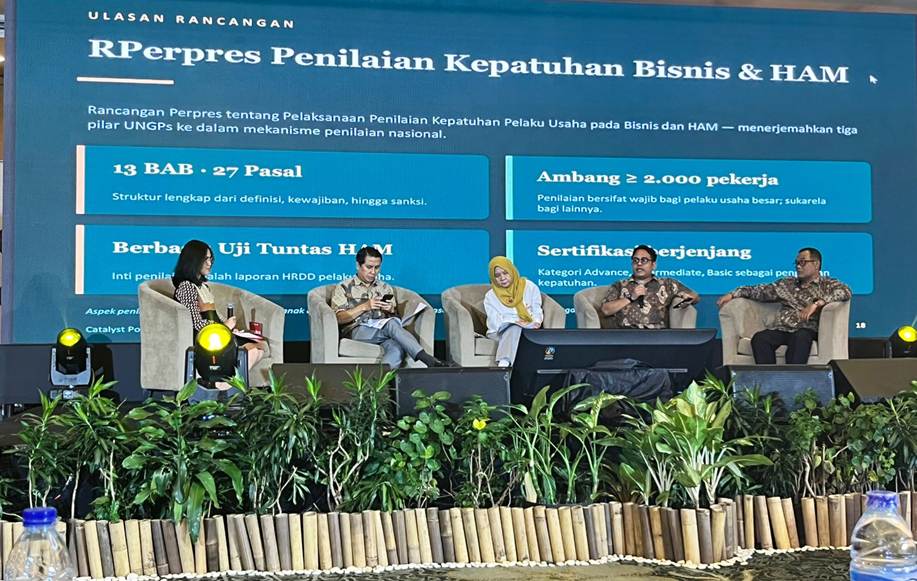
The Executive Director of Catalyst Policy Works, Mr. Wahyudi Djafar, delivered a presentation on business and human rights issues within agricultural supply chains. In his presentation, he explained that respect for human rights has become an integral component of sustainable business practices and global competitiveness. As international regulations continue to evolve, particularly in Europe, companies are increasingly expected not only to ensure compliance within their own operations but also to take responsibility for human rights conditions throughout their supply chains, including among farmers and upstream suppliers.
The agricultural sector remains a key area of concern due to its significant human rights risks, including child labour, informal employment without adequate protection, poor working conditions, discrimination, and agrarian conflicts. Within the framework of the United Nations Guiding Principles on Business and Human Rights (UNGPs), companies are encouraged to implement Human Rights Due Diligence (HRDD) as an ongoing process to identify, prevent, mitigate, and address adverse human rights impacts arising from their business operations and supply chains.
The presentation also highlighted that the elimination of child labour must be a key priority in the implementation of Business and Human Rights principles within the agricultural sector. Globally, the majority of child labour remains concentrated in agriculture, including in Indonesia, where children are often engaged in activities such as harvesting, pesticide spraying, and other physically demanding tasks that can interfere with their education, health, and development.
To address these challenges, Indonesia is strengthening its policy framework through the National Strategy on Business and Human Rights and the development of a Presidential Regulation on the Assessment of Business Compliance with Business and Human Rights Principles. This policy is expected to encourage companies to conduct Human Rights Due Diligence (HRDD), establish supply chain traceability systems, strengthen grievance and remediation mechanisms, and ensure that their supply chains are free from child labour. In this regard, compliance with Business and Human Rights principles is viewed not merely as a regulatory obligation, but as a critical foundation for business sustainability, access to global markets, the protection of children’s rights, and the enhanced competitiveness of Indonesia’s agricultural sector.
Representing the business sector, Ms. Ratna Dwikora, Chairwoman of the Advocacy for the Protection of the Rights of Children and Women at the Indonesian Chamber of Commerce and Industry (KADIN), explained why the engagement of the private sector is essential. She emphasized that investing in child protection contributes to the long-term development of quality human resources while also responding to growing global expectations regarding Environmental, Social, and Governance (ESG) principles, Business and Human Rights, and Human Rights Due Diligence. According to Ratna, such engagement also delivers tangible business benefits, including increased market confidence and stronger supply chain competitiveness.
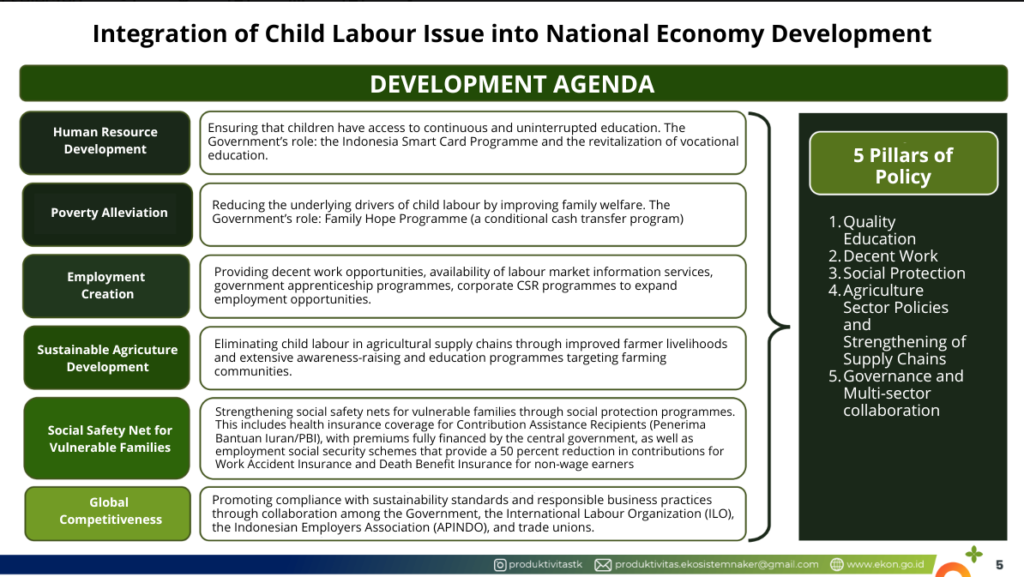
Meanwhile, Mr. Chairul Saleh, Assistant Deputy for Productivity Enhancement and Employment Ecosystem Development at the Coordinating Ministry for Economic Affairs, outlined key national policy directions, including the Roadmap Towards a Child Labour-Free Indonesia and the PRISMA 2.0 (Business Risk and Human Rights Assessment) application, which now includes twelve self-assessment indicators for business actors.
In his presentation, Mr. Saleh emphasized that the elimination of child labour cannot be separated from the broader national economic development agenda. Preventing child labour requires a comprehensive approach that includes improving access to quality education, creating decent work opportunities for parents, expanding social protection for vulnerable families, strengthening the agricultural sector, and promoting effective governance and multi-stakeholder collaboration.
Within the context of sustainable agriculture, child protection should be regarded as an integral component of efforts to achieve food security. Sustainable agriculture is not solely about increasing production; it must also ensure that children have access to education, opportunities for healthy development, and a better future. Therefore, improving farmers’ livelihoods and eliminating child labour are closely interconnected and mutually reinforcing objectives.
Furthermore, he highlighted the importance of strengthening collaboration among government ministries, local governments, businesses, workers’ organizations, and communities in addressing child labour. The success of these efforts depends on accurate data integration, continuous monitoring and supervision, increased agricultural productivity, expanded access to education, and broad-based public awareness and behavioural change initiatives.
In line with the principles of responsible business conduct and respect for human rights, the private sector is also encouraged to adopt child labour-free business practices and support child protection throughout its supply chains. Consequently, the elimination of child labour should be positioned as a national movement that is closely integrated with sustainable agricultural development, poverty reduction, and the enhancement of Indonesia’s human capital.
The final speaker, Mr. Andi Akbar, Head of the National Secretariat of PAACLA Indonesia, emphasized in his presentation that child labour in the agricultural sector is not merely a family issue, but a systemic challenge involving families, communities, markets, and public policies at multiple levels. He highlighted the need for a paradigm shift within the business sector – from simply ensuring the absence of child labour within company operations and facilities (compliance) to exercising comprehensive oversight of upstream farmers and suppliers throughout the supply chain (due diligence).
Mr. Akbar also introduced the Child Labour Monitoring and Remediation System (CLMRS), developed in line with Ministry of Women’s Empowerment and Child Protection (MoWECP) Regulation No. 6 of 2024, as an early detection mechanism that actively engages teachers, farmer groups, and village governments.
PAACLA Indonesia further identified a major blind spot in addressing child labour in agriculture: the presence of child labour among smallholder farmers, community plantations, and family-based and informal work arrangements that are often outside the scope of formal company monitoring systems. The highest risks tend to occur during planting and harvesting seasons when labour demand increases, while children’s involvement is frequently perceived as a family tradition and therefore remains undocumented.
To address this gap, PAACLA promotes the implementation of a community- and landscape-based Child Labour Monitoring and Remediation System (CLMRS). This approach positions teachers, neighbours, farmer groups, and village governments as the frontline actors in the early identification, reporting, and follow-up of child labour cases. Through this system, awareness and information can be translated into coordinated action, enabling communities and stakeholders to work together to prevent and address child labour more effectively.
Presentation of PAACLA Award 2026
A key highlight of the event was the presentation of the PAACLA Award 2026, the second annual recognition programme organized by PAACLA Indonesia to acknowledge good practices in addressing child labour in the agricultural sector. A total of 18 initiatives submitted by 13 companies and one community-based organization were evaluated by an independent jury comprising representatives from the Ministry of Human Rights, the Ministry of Manpower, ILO Indonesia, the Indonesia Global Compact Network (IGCN), PAACLA Indonesia, and JARAK.
The assessment was based on five weighted criteria: programme impact (35%), sustainability (25%), innovation (15%), replication potential (15%), and multi-stakeholder collaboration (10%). The awards were presented across three categories according to the scale and affiliation of the participating organizations. As a result, ten initiatives were selected as recipients of the PAACLA Award 2026.
In the multinational company category, awards were presented to three companies. The first recipient was PT Mondelez International through its Cocoa Life Indonesia programme. Operating for more than a decade, the programme has integrated child protection into village development planning forums (Musrenbang) across 336 communities. It has engaged 32,500 cocoa farmers in 310 communities, supported 15,000 women in joining Village Savings and Loan Associations (VSLAs), and provided child labour awareness and prevention education to 94,800 community members. The second recipient was PT AMP Plantation, part of the Wilmar Group, which was recognized for establishing a Women’s and Child Workers Protection House (RP3A) within its palm oil plantation operations in West Sumatra, as well as for implementing mandatory child protection standards that apply to all contractors and third-party partners throughout its supply chain. The third recipient was PT Minamas Plantation, which was recognized for its integrated child labour prevention ecosystem programme covering four key dimensions: institutions and communities, families, schools, and child psychological well-being.
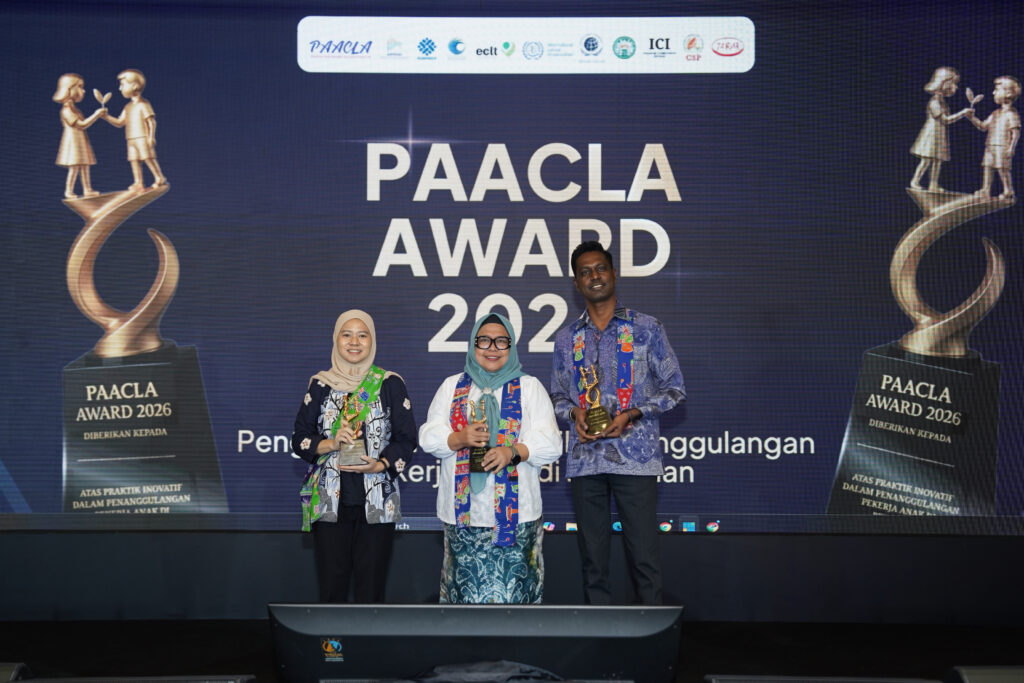
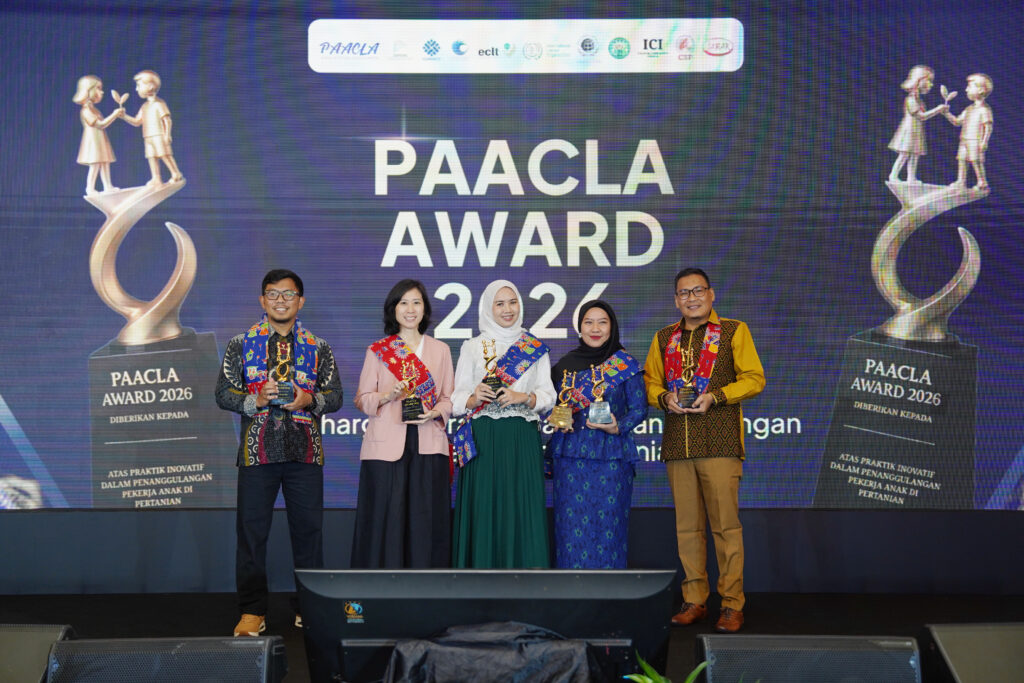
The category of national companies with multinational affiliations recognized six recipients. These included CV Restu Sejati, a tobacco and clove supplier with more than 70 years of experience, which has implemented a GPS-based Five-Stage Monitoring System and questionnaire-based monitoring across 187 villages in four provinces. The company has also established the e-SMILE after-school programme for the children of farming families. Another recipient was PT Sinar Mas Agribusiness and Food, which operates 62 free schools serving 10,606 students and more than 300 childcare centres supporting over 8,000 children. The company also enforces a minimum recruitment age of 18 years across its operations. The other award recipients in this category were PT Sandika Natapalma & PT Budidaya Agro Lestari, PT Aneka Intipersada, PT Teguh Sempurna, and PT Guthrie Pecconina Indonesia. These companies were recognized for their initiatives in strengthening childcare services, promoting child protection awareness, and empowering communities within plantation areas.
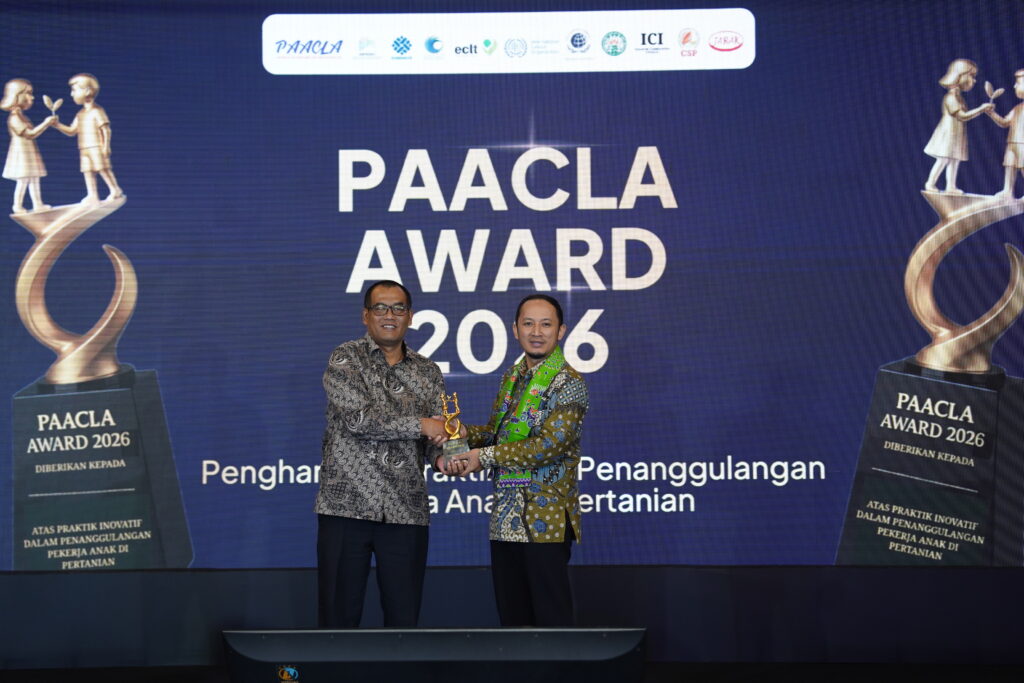
In the local company category, the award was presented to PT Teladan Prima Agro Tbk for its Sustainable Palm Oil Policy, which integrates the prohibition of child labour and respect for human rights into corporate governance practices. The policy is supported by eight subsidiary entities that had obtained Indonesian Sustainable Palm Oil (ISPO) certification by 2024.
Policy Direction and Future Action
The closing session, entitled “Policy Direction and Future Action,” featured two speakers: Mr. Aris Wahyudi, Expert Staff to the Minister of Manpower for Labour Economics, representing the Minister of Manpower, and Mr. Asitha Seneviratne, Project Technical Officer at the ILO Office for Indonesia and Timor-Leste, representing the Director of the ILO Office for Indonesia and Timor-Leste.
In his remarks, Mr. Wahyudi highlighted several strategic challenges facing employment development in Indonesia, including the need to strengthen the link between education and labour market demands, improve labour regulations, enhance the enforcement of labour standards and occupational safety and health, and promote transformative industrial relations. He explained that the Ministry of Manpower is encouraging a shift in its role – from being solely a labour administration institution to becoming a driver of human resource development focused on the creation of decent work, inclusion of vulnerable groups, and the strengthening of labour market information systems through the digitalization of employment services. These efforts aim to enhance the competitiveness of Indonesia’s workforce while expanding access to quality training, certification, and employment opportunities.
With regard to child labour, he emphasized the importance of strengthening national collaboration to accelerate child labour elimination through the implementation of the Roadmap Towards a Child Labour-Free Indonesia and its associated Action Programme. The success of this agenda requires the active involvement of all stakeholders, including central and local governments, businesses, educational and training institutions, communities, and civil society. The approach promoted is the development of an integrated and collaborative employment ecosystem built around shared interests and collective action. Guided by the spirit of “One Vision, Many Actions,” efforts to eliminate child labour are not solely the responsibility of the government but constitute a shared movement to ensure that every child enjoys the right to education, protection, and a better future.
Meanwhile, Mr. Asitha Seneviratne shared his views on the importance of ensuring that adults have access to decent work and adequate incomes as a means of reducing the risk of child labour. He also emphasized the need for governments to enforce labour regulations that are aligned with international labour standards established by the ILO. At the same time, he stressed the importance of building responsible companies and supply chains in which all business actors fulfil their obligations and comply with applicable laws and regulations.
Mr. Seneviratne further emphasized that achieving decent work for adults – where workers’ rights are respected and protected – is a critical investment in safeguarding the future of families, children, and ultimately Indonesia as a whole.
Closing
The National Seminar and PAACLA Award 2026 is one of Indonesia’s key initiatives in commemorating the 2026 World Day Against Child Labour. By bringing together government policy perspectives, academic insights, international expertise, and practical experiences from the business sector within a single forum, the event reinforced the global campaign message: “Red Card to Child Labour: Fair Play for Children, Decent Work for Adults.” The event highlighted that the elimination of child labour can only be achieved through sustained multi-stakeholder collaboration, with the agricultural sector playing a central role in advancing this effort in Indonesia.
—
PAACLA Award Activity News: